Do senators vote the way they speak?
Mostly. We set what each of the 100 current senators said about 9 contested issues against how they voted on the same issues, from 2013 to today. Where a senator did both, words and votes point the same way in 251 of 390 cases. They point in opposite directions in 31.
Most of the clashes trace back to one Senate rule
19 of the 31 opposite-direction records are about the filibuster (bills). Nearly all of them come from one document: a letter 31 current senators signed on Apr 7, 2017, asking their leaders to keep the 60-vote rule for legislation.
On Jan 19, 2022, the Senate voted on a narrower change to that rule, recorded as “Talking filibuster for voting rights (H.R. 5746)”. The change came from the majority, which was Democratic at the time.
Letter to Senate leaders to preserve the 60-vote threshold for legislationThe letter as printed in the Congressional Record
Voted to curtail the rule: 18
17 Democrats, 1 Independent











Voted to keep the rule: 13
13 Republicans






Each signer's later votes on the filibuster for bills, read from the Senate roll call. Signers are matched to senators by surname and state, only if they were serving on the signing date. The same letter counts as a stated position in every score on this site.
When control of the Senate flips, both parties switch sides on nominations
Senators who served in both the majority and the minority give a direct test: does their position move when their party's status changes? On the votes it takes to confirm nominees, every one of them moved. 26 of 26 Democrats and 19 of 19 Republicans defended the rule in the minority and cut it back in the majority.
Whole-caucus reversals are reported here as party findings and are kept out of individual rankings, so no senator is marked down for moving with everyone else.
Voting with your party and keeping your word are different things
A senator can vote with their caucus every time and still match their own words exactly. The map keeps the two apart. On these issues Republicans vote apart from their caucus more often: the typical Republican scores 15 on that measure, the typical Democrat 6. The four furthest from their own party are Paul (R-KY), Lee (R-UT), Collins (R-ME) and Murkowski (R-AK).
Only 11 of 72 senators stand clearly apart from their own party
Each senator is compared with the typical member of their own caucus on the same issues. The bar is the range of ranks the evidence allows. Where two bars overlap, the order between those senators means nothing, which is true of most pairs. 28 more senators have too little on record to rank.
 Pete RickettsNEAbove peers2
 Adam B. SchiffCAAbove peers3Jeanne ShaheenNHAbove peers4Angus S. King, Jr.MEAbove peers5
 Richard J. DurbinILIn line with peers6
 Andy KimNJIn line with peers7Shelley Moore CapitoWVIn line with peers8
 Jeff MerkleyORIn line with peers65
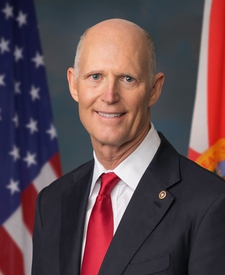 Rick ScottFLIn line with peers66
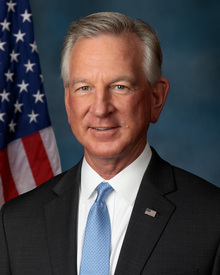 Tommy TubervilleALBelow peers67
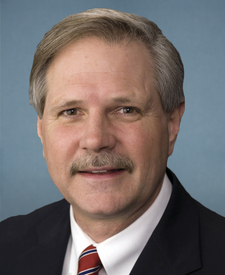 John HoevenNDBelow peers68
 Jacky RosenNVBelow peers69
 Roger MarshallKSBelow peers70
 Ron JohnsonWIBelow peers71
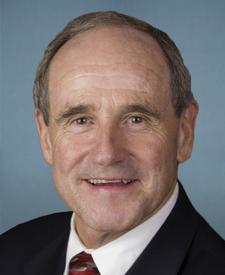 James E. RischIDBelow peers72
 Mike CrapoIDBelow peers
What this can tell you, and what it can't yet
It measures
- Whether a senator's votes go the way their own floor statements, letters and bills point
- Whether their position holds when their party wins or loses the Senate
- How often they vote apart from their own caucus
It doesn't measure
- Whether a position is right, or whether a claim is true
- Why a senator voted as they did
- Anything said off the Senate floor: press releases, interviews, social media